Health and Safety Policy for Tenancy Cleans
 Purpose and scope: This tenancy cleaning health and safety policy sets out the principles and practical measures to protect cleaning operatives, tenants, property owners and visitors during end-of-tenancy cleans and move-out cleaning services. The policy applies to all staff and contractors engaged in tenancy cleans, including deep cleaning, carpet treatments and specialist tenancy clean tasks. It is designed to ensure a consistent approach to risk management and safe working practices.
Responsibilities and roles
All staff must be familiar with this tenancy clean policy and follow the outlined procedures. Managers are responsible for implementing safe systems, allocating resources and ensuring training. Operatives must follow instructions, use personal protective equipment and report hazards. The organisation will provide appropriate supervision and review actions after incidents; all parties share responsibility for safety.![A professional cleaner wearing a dark long-sleeved shirt, purple gloves, and a blue apron is cleaning a white window frame in a residential setting. The cleaner is holding a spray bottle in one hand and a light blue microfiber cloth in the other, carefully wiping down the surface. In the background, there are large glass windows with a grid pattern, allowing natural light to illuminate the area. The scene appears to be in a kitchen or living room, with the window frame situated above a radiator or vent, and part of an orange-colored object visible in the foreground. The surfaces are clean and well-maintained, reflecting a high standard of hygiene. The environment suggests a meticulous approach to cleaning, aligning with professional house cleaning standards that Tenancy Cleans offers, especially in areas around [POSTCODE] in [TOWN]. This image exemplifies detailed, high-quality domestic cleaning services focused on brightening and sanitizing window frames and surrounding areas, consistent with health and safety policies in residential properties managed in the UK.](/pub/_photos/cleaning/f563259568.jpg)
Risk assessment and planning
Before every end of tenancy cleaning assignment a documented risk assessment should be carried out for the premises. The assessment must identify hazards such as slips and trips, chemical exposure, manual handling and contaminated waste. Control measures should be recorded and implemented, including safe access arrangements, provision of PPE and where necessary staging or ladder safety for high-reach cleaning during tenancy cleaning operations.Personal protective equipment (PPE) Operatives must wear suitable PPE for each task. Typical items include gloves, eye protection, masks or respirators for dusty or chemical tasks, and non-slip footwear. PPE should be maintained, correctly fitted and replaced when damaged. Supervisors will monitor correct PPE use during move-out cleaning and tenancy cleans to reduce exposure to hazards.
Chemicals and COSHH considerations Cleaning chemicals are used routinely in tenant cleaning services; safe handling, storage and dilution must be enforced. Products should be assessed, labelled and used according to manufacturer instructions. Where hazardous substances are present, operatives must be briefed and provided with safety data sheets. A conservative approach using least hazardous effective products is encouraged to protect staff and subsequent occupants.
![A close-up view of a person wearing bright yellow cleaning gloves using a yellow and green sponge to wipe the surface of a white ceramic bathroom sink. The sink features a modern, chrome-plated faucet with a curved spout, and the sink’s overflow hole is visible below the faucet. The background shows tiled walls typical of a residential bathroom, and the lower part of the sink’s basin appears clean and shiny. The scene is well-lit, emphasizing the cleanliness and polished condition of the fixtures, aligning with professional cleaning services in the [TOWN] area, potentially within the [POSTCODE], as part of Tenancy Cleans' expertise in maintaining hygienic bathroom environments.](/pub/_photos/cleaning/f1432993792.jpg) Equipment and electrical safety All powered equipment used in end-of-tenancy cleans — vacuums, polishers, steam cleaners — must be inspected regularly and maintained. Faulty equipment must be removed from service. Cables should be routed to avoid trip hazards and operated with appropriate residual current devices where necessary. Training in correct equipment handling reduces the risk of injury and damage to property.
Equipment and electrical safety All powered equipment used in end-of-tenancy cleans — vacuums, polishers, steam cleaners — must be inspected regularly and maintained. Faulty equipment must be removed from service. Cables should be routed to avoid trip hazards and operated with appropriate residual current devices where necessary. Training in correct equipment handling reduces the risk of injury and damage to property.
Manual handling and ergonomics: Tenancy cleaning often involves lifting furniture, moving mattresses and handling bulky items. A safe manual handling strategy should be used: plan lifts, use mechanical aids where practical, work in teams for heavy items and adopt safe postures. Reducing repetitive strain through task rotation and micro-breaks is recommended to protect staff health.
Infection control and hygiene Cleaning of kitchens, bathrooms and areas exposed to biological contaminants requires strict hygiene controls. Use appropriate disinfectants for touch points and sanitary fittings, change water frequently, and segregate cleaning cloths and mops for different areas. Waste from tenancy cleans should be contained, double-bagged if contaminated, and stored securely until disposal.
Waste handling and storage must follow safe procedures to avoid contamination or pest attraction. Sharps or hazardous materials discovered during a tenancy clean should be reported and managed through designated safe disposal routes. Record keeping for hazardous waste and unusual finds protects staff and property owners.
Fire safety and emergency procedures Every tenancy clean location must be assessed for fire risks; operatives should be briefed on escape routes and assembly points for each property visited. Flammable products should be stored safely and not used near ignition sources. Incident response procedures, including first aid and emergency contacts, must be accessible to staff performing tenancy cleaning.
Training, competence and supervision Ongoing training is essential for a robust tenancy cleaning health and safety program. Training topics include safe chemical use, PPE, manual handling, equipment operation and incident reporting. New staff should receive supervised on-the-job coaching, and periodic refresher training is required to maintain competence in end of tenancy cleaning practices.
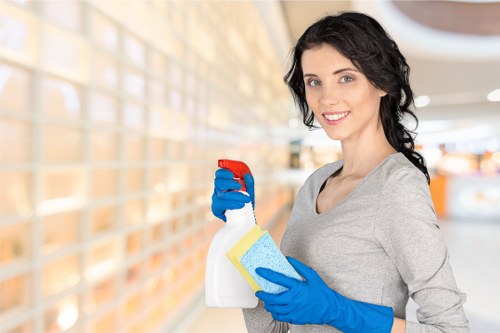 Monitoring, reporting and continuous improvement Regular inspections, audits and performance reviews will ensure compliance with this tenancy clean safety policy. Incidents and near misses must be reported promptly and investigated to identify root causes and corrective actions. Lessons learned will be integrated into procedures to improve safety and operational efficiency.
![A young woman with dark hair tied back, smiling and wearing an orange glove on her left hand, holds a yellow spray bottle aimed toward the camera. She is standing in a well-lit, modern kitchen or cleaning area with a blurred background that suggests indoor lighting and a clean environment. In her right hand, she holds a blue plastic container filled with various cleaning supplies, including spray bottles, a sponge, and cloths. The scene emphasizes professional cleaning readiness, with the woman appearing enthusiastic and prepared for detailed cleaning tasks. The clean, organized setting aligns with the services offered by Tenancy Cleans in [TOWN], [POSTCODE], and visually communicates a commitment to thorough and effective cleaning with a focus on residential or commercial spaces.](/pub/_photos/cleaning/f1295530824.jpg)
Policy review and commitment
This tenancy cleaning health and safety policy will be reviewed periodically and updated in line with operational experience and evolving best practice. Commitment to safety from managers and operatives ensures that tenancy cleans and move-out cleaning are carried out with minimal risk. Everyone involved in tenancy cleans should be encouraged to raise concerns and contribute to safer working methods.Key controls checklist
- Carry out pre-job risk assessments for each tenancy cleaning task.
- Provide and use suitable PPE for cleaning operatives.
- Use and store chemicals safely with clear labeling and data sheets.
- Maintain and inspect equipment regularly for tenant clean services.
- Follow infection control, waste handling and emergency procedures.
Adherence to this policy protects people and property, supports professionalism in tenant cleaning services and promotes a culture where safety is integral to quality tenancy cleans. Regular communication, training and review will sustain improvements and ensure safe, efficient end-of-tenancy cleaning operations.